

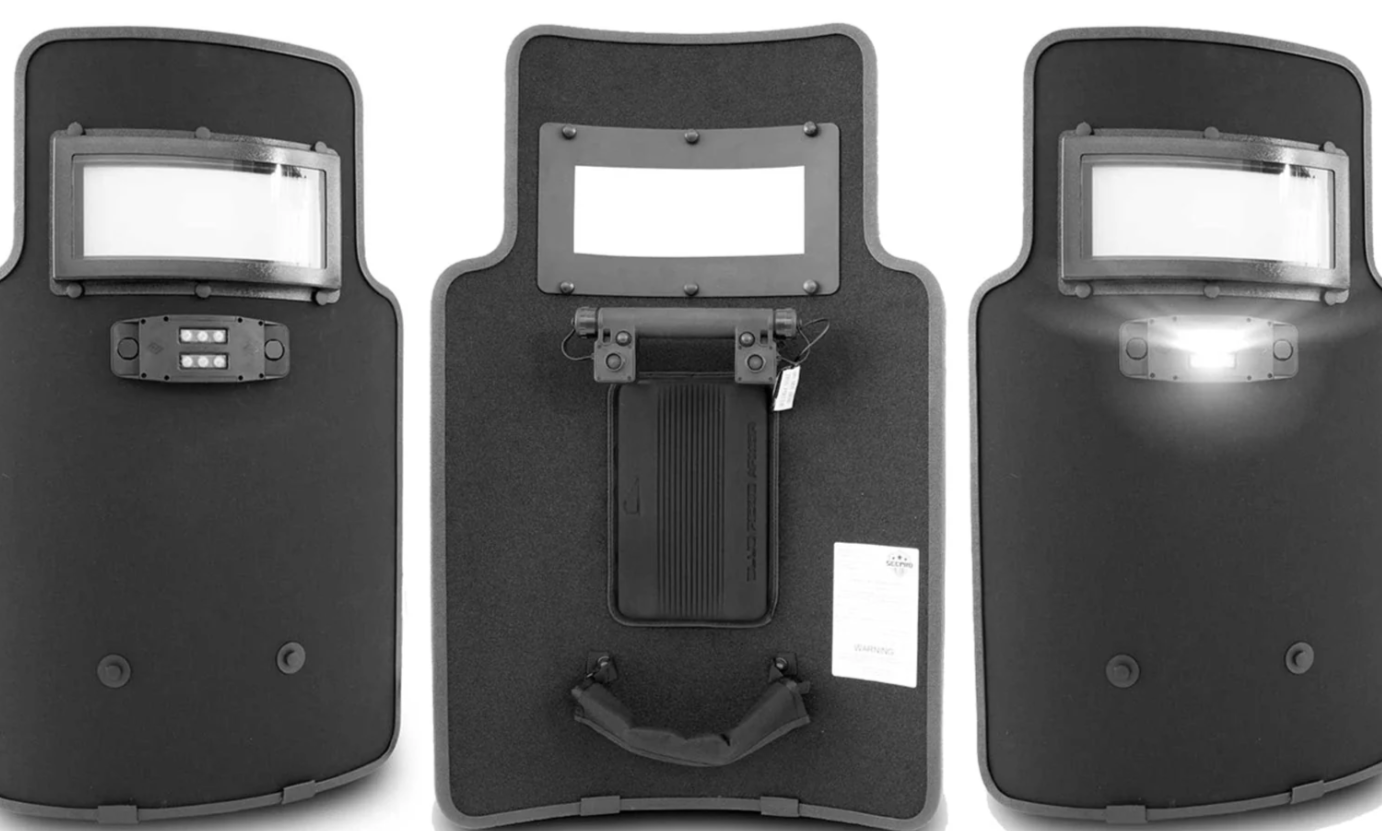
Ballistic shields are now essential equipment in the field of contemporary security and defence, offering protection in demanding and dynamic circumstances. It is a vital tool for guaranteeing the safety of individuals in the line of duty, whether it is during a high-risk search warrant or a hostage rescue operation. A ballistic mini shield is a small, lightweight device designed to provide personal protection against gunshot and fragmentation in high-risk tactical circumstances and offer improved mobility for the user.
This comprehensive guide provides all the information you want regarding ballistic shields, regardless of whether you are a federal agent or a member of the armed forces. As we examine the state-of-the-art equipment that protects people who risk their lives to defend us, we cordially welcome you to accompany us on an exploration of the ballistic shield industry.
What Is a Ballistic Shield?
A ballistic shield is a type of protective gear made to ward off bullets, fragments, and other particles. Manufacturers usually use opaque and translucent steel armour that can withstand shrapnel and gunshots.
Are Ballistic Shields Bulletproof?
Ballistic shields are not completely bulletproof, although they can provide some protection from gunshots. The resistance of a ballistic shield is determined by its structure and design.
Why and Who Uses Ballistic Shields?
For many government organisations, such as the military and law enforcement, ballistic shields are an essential tool. At government buildings, border and security checkpoints, and access and entrance control points, ballistic shields offer essential protection. Ballistic shields frequently offer vital defence against ballistic threats like fragmentation, bursts, and bullets.
These agencies’ employees often work in hazardous environments where they could run into armed criminals or be in danger of explosives. In these circumstances, agents and officers can be vitally protected by heavy-duty transportable or permanently placed ballistic shields, which enable them to approach and eliminate possible threats safely.
Ballistic shields are widely used by the military and federal law enforcement. Threats to service troops on the front lines include improvised explosive devices and small-arms fire. As soldiers, sailors, marines, and airmen move through conflict zones, ballistic shields can offer an essential layer of protection.
In general, federal agencies rely heavily on ballistic shields. They are perfect for access control and offer a vital layer of security for employees who operate in hazardous environments. Ballistic shields will probably be crucial in defending government assets and personnel as threats change.
In addition to federal agencies, state governments also make substantial use of ballistic shields in the National Guard, courts, jails, banking, energy generating, nuclear, and transportation, including bus, train, and airport terminals.
Ballistic Shields: How Do They Work?
Ballistic shields offer defence against shrapnel and gunshots. They function by absorbing and dispersing the energy of the incoming bullet, making it less likely to damage the barrier.
The material of a ballistic shield will start to distort and absorb impact energy when a bullet hits it. This deformation lessens the strain on any one part of the shield and helps disperse the force of the collision. Additionally, high-performance polyethene fibres will start to stretch and absorb energy, reducing the impact force even more.
What makes up a Ballistic Shield?
The specific design of a ballistic shield is determined by its intended application and level of protection. Ballistic shields are typically made of a mix of materials, including ceramics, steel, glass, Kevlar, and Dyneema.
Experts select these materials due to their ability to absorb and release energy and withstand high-velocity collisions. Engineers also use ballistic shields in construction work to protect from any possible dangers since it has multiple layers of materials for protection